✦Signature · fixed departure
The Grand Traverse
Twelve days down the spine of Morocco — coast, imperial cities, Sahara & Atlas.
- Dates
- April 1 – April 12, 2027
- Duration
- 12 days / 11 nights
- Route
- CMN → CMN · 1490 mi
- Price
- $4,800 per person · final
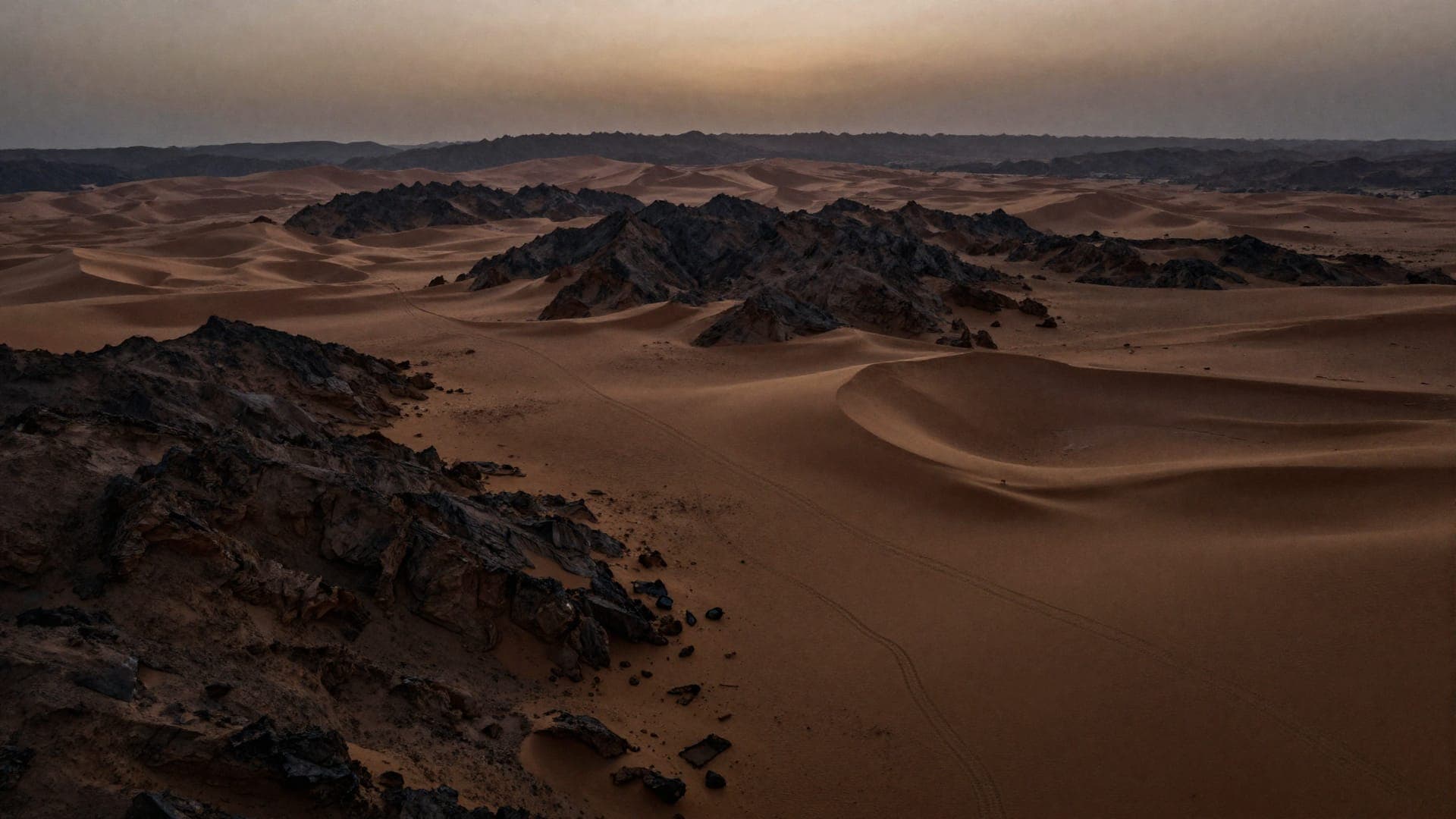
Twelve days, one driver, a fixed price
✦Price and terms
$4,800 per person
per person — final price. Quote valid until August 31, 2026.
- A 30% deposit by bank transfer secures your booking — we email you the transfer details once your itinerary is confirmed.
- This offer is valid before August 31, 2026. Prices may change after this date; we recommend booking early to secure the best price.
- Prices are subject to availability at the time of confirmation and may vary during peak season, festivals and public holidays.
✦Day 01 · 01 April 2027
Arrival & the Capital on the Atlantic
Your odyssey begins the moment you land. A Moroccan Mirage host meets you at Casablanca's Mohammed V Airport and your private, air-conditioned vehicle carries you north along the Atlantic to Rabat — Morocco's calm, green, ocean-facing capital, and the most understated of its four imperial cities. The afternoon eases you into the country's rhythm: the Kasbah of the Udayas, a fortified quarter of blue-and-white lanes tumbling toward the mouth of the Bou Regreg river, with its Andalusian garden and café terrace over the water; the Hassan Tower, the truncated minaret of a mosque begun in the 12th century and never finished, presiding over a field of broken columns; and the marble Mausoleum of Mohammed V, guarded by mounted royal sentries. If time allows, the romantic ruins and storks' nests of the Chellah necropolis make a quiet, atmospheric close to the day.
- Drive
- approx. 55 mi / ~1h
- Night
- Riad Kalaa, Rabat
- Meals
- — (dinner at leisure)
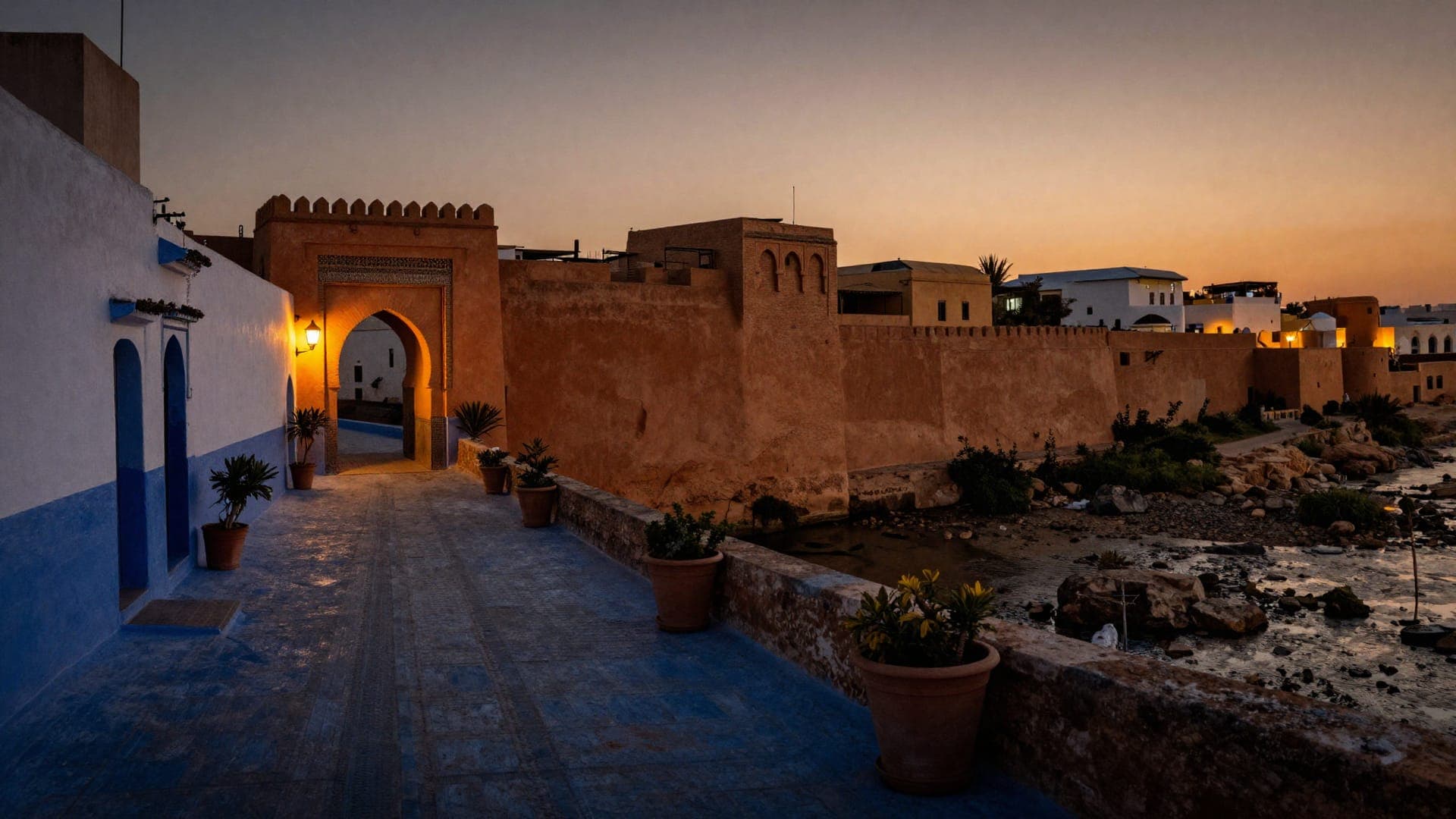
Day 1 — Casablanca (arrival) → Rabat
✦Day 02 · 02 April 2027
Into the Blue: Chefchaouen
This morning we climb from the coast into the Rif Mountains to reach Chefchaouen, the fabled "Blue Pearl." Founded in 1471 as a fortress town, its medina is famously washed in every conceivable shade of indigo, cobalt and sky — a colour tradition whose origins locals variously trace to Andalusian and Jewish heritage, to keeping cool, or simply to beauty. The point isn't the explanation; it's the wandering. You'll drift up stepped alleys hung with flowerpots and hand-woven blankets, past mountain-spring fountains and artisan doorways, to the shady Plaza Uta el-Hammam beneath the red-earth kasbah and octagonal mosque minaret. As the light softens, we climb to the Spanish Mosque viewpoint on the hillside opposite, where the whole blue town glows gold at sunset against the Rif peaks.
- Drive
- approx. 125 mi / ~4h
- Night
- Hotel Cherifa, Chefchaouen
- Meals
- Breakfast
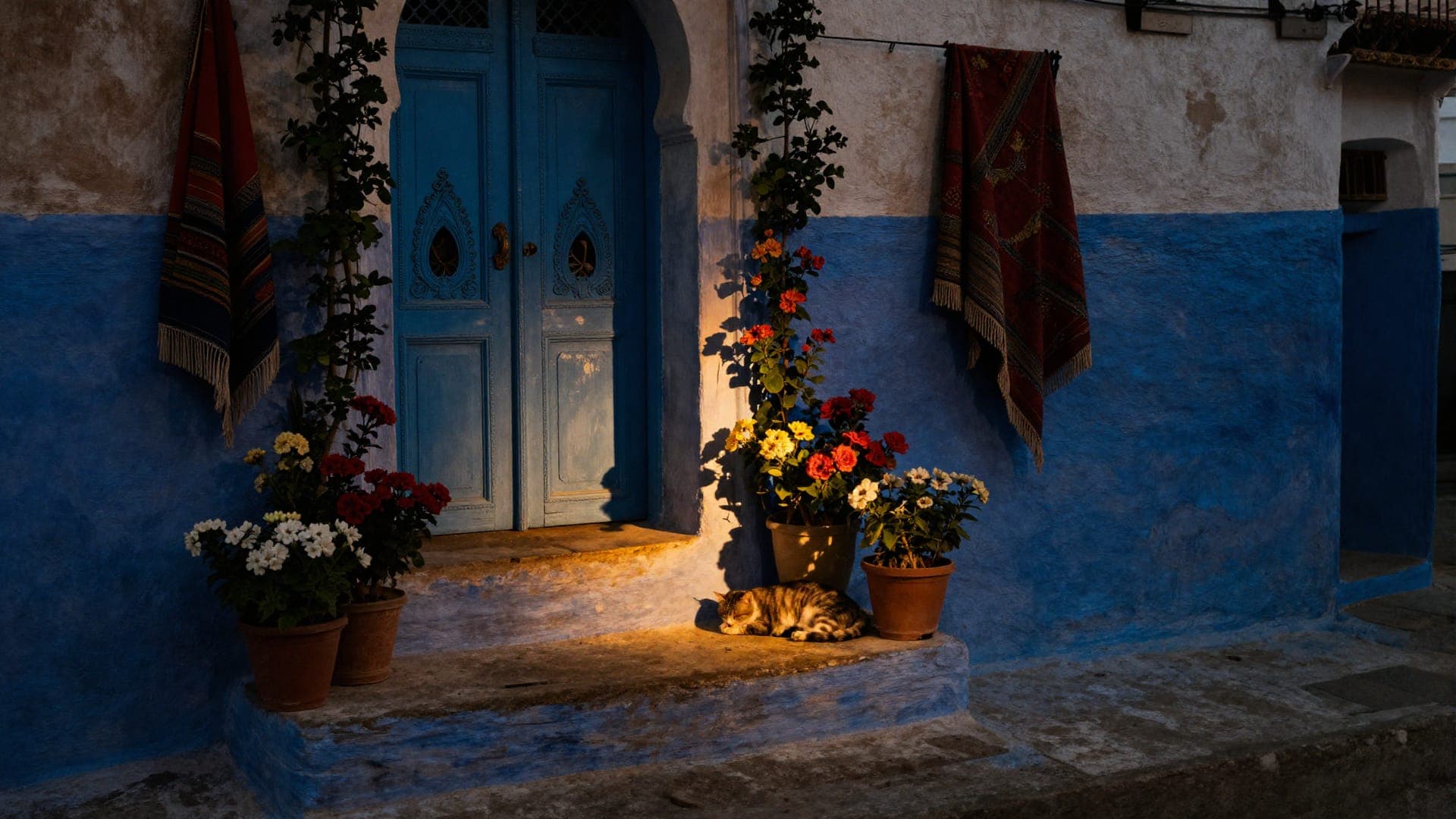
Day 2 — Rabat → Chefchaouen
✦Day 03 · 03 April 2027
Roman Echoes & the Spiritual City
Descending south toward the imperial heartland, we make a landmark stop at Volubilis, the best-preserved Roman city in Morocco and a UNESCO World Heritage Site. Once a prosperous provincial capital at the empire's far southwestern edge, it still stands among rolling wheat fields: a triumphal arch, the columns of the basilica and capitol, olive-oil presses, and — most memorably — a series of astonishingly intact floor mosaics depicting Orpheus, Bacchus, Hercules and the seasons, open to the sky where the villas once stood. Nearby rises the sacred, whitewashed pilgrimage town of Moulay Idriss, cradling the tomb of the founder of Morocco's first dynasty. By late afternoon we enter Fez, the country's spiritual and intellectual soul, ready for a full day inside its walls tomorrow.
- Drive
- approx. 125 mi / ~4h plus sightseeing
- Night
- Riad Ahlam, Fez
- Meals
- Breakfast
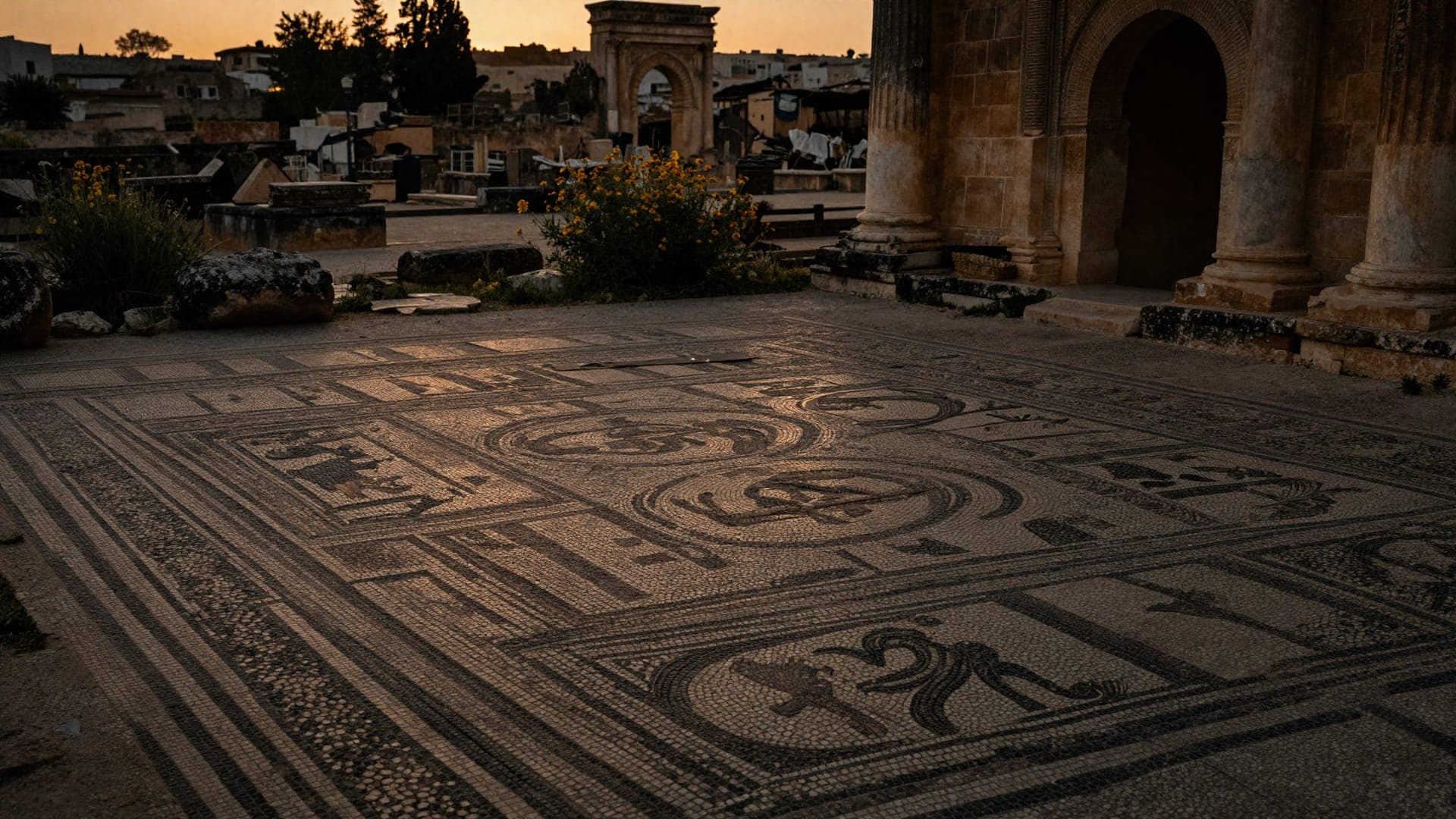
Day 3 — Chefchaouen → Volubilis → (Moulay Idriss) → Fez
✦Day 04 · 04 April 2027
Inside the Medieval Medina of Fez
A full, unhurried day inside Fes el-Bali, founded in the 9th century and the largest car-free urban area on earth — a maze of some nine thousand lanes where donkeys still carry the loads. With a licensed local guide you'll navigate to the landmarks that made Fez a medieval capital of learning and craft: the Al-Qarawiyyin, founded in 859 and recognised as the world's oldest continuously operating university; the exquisitely carved cedar, stucco and zellij tilework of the Bou Inania and Al-Attarine madrasas; and the famous Chouara tanneries, where leather is still cured in stone vats of colour exactly as it has been for centuries (you'll be handed a sprig of mint for the view from the terraces above). Between them lie the sensory souks — coppersmiths, weavers, spice pyramids, the call to prayer echoing off the walls.
- Drive
- minimal (on foot within the medina)
- Night
- Riad Ahlam, Fez
- Meals
- Breakfast
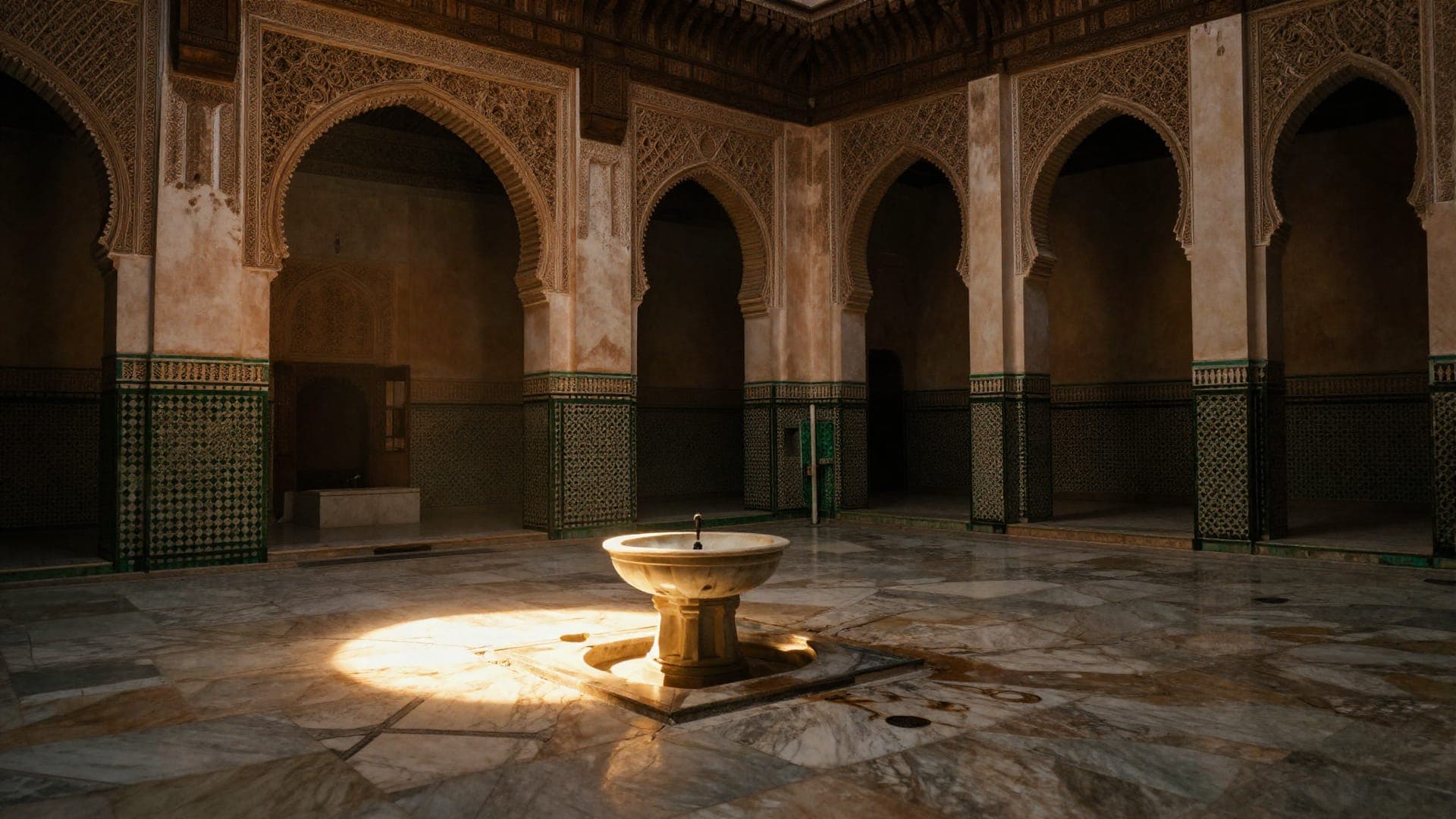
Day 4 — Fez — full day in the medina (Fes el-Bali)
✦Day 05 · 05 April 2027
Across the Atlas to the Desert's Edge
One of the great driving days in Morocco, unspooling through half a dozen landscapes. We cross the Middle Atlas via Ifrane, an incongruous alpine town of pitched roofs and clipped gardens nicknamed the "Switzerland of Morocco," then the cedar forests of Azrou, home to troops of wild Barbary macaques. The road climbs and falls through Berber plateaus and the mining town of Midelt before the terrain turns ochre and lunar. Then comes the highlight: the Ziz Valley, where a single river conjures an unbroken ribbon of tens of thousands of date palms threading between red canyon walls — the classic gateway image of the Sahara. We overnight in Erfoud, the fossil-and-date town on the desert's threshold.
- Drive
- approx. 230 mi / ~6.5–7h incl. breaks (a long, spectacular day)
- Night
- Xaluca Erfoud, Erfoud
- Meals
- Breakfast
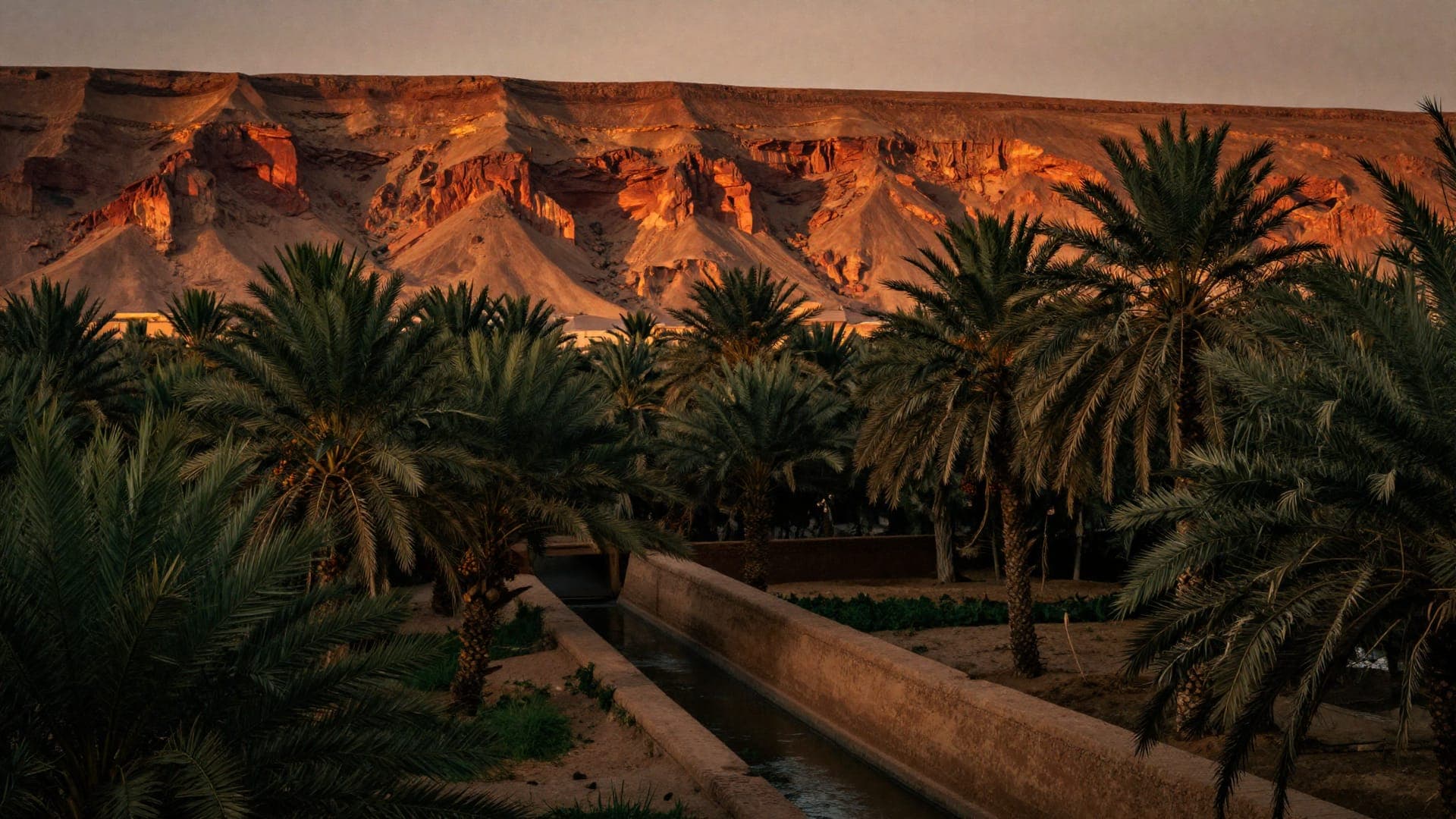
Day 5 — Fez → Ifrane → Azrou → Midelt → Ziz Valley → Erfoud
✦Day 06 · 06 April 2027
Into the Sea of Sand: Erg Chebbi
A short transfer brings us to Merzouga and the first sight of Erg Chebbi — a sea of wind-sculpted dunes rising as high as 150 metres, glowing apricot, rose and deep gold as the sun moves. There's time to rest through the heat of the day before the afternoon's centrepiece: as the light lengthens, you mount a camel and your caravan sets off into the sand to a luxury desert camp tucked among the dunes. You'll climb a ridge to watch the sun melt into the horizon, dine under the open sky, and — if the season obliges — fall asleep beneath a Milky Way undimmed by any city light. (Optional add-ons: 4×4 dune driving, sandboarding, a visit to Khamlia's Gnaoua musicians, sunrise over the crest.)
- Drive
- approx. 35 mi / ~1h, then camel trek
- Night
- Dihya Desert Camp, Merzouga / Erg Chebbi
- Meals
- Breakfast · Dinner (at the camp)
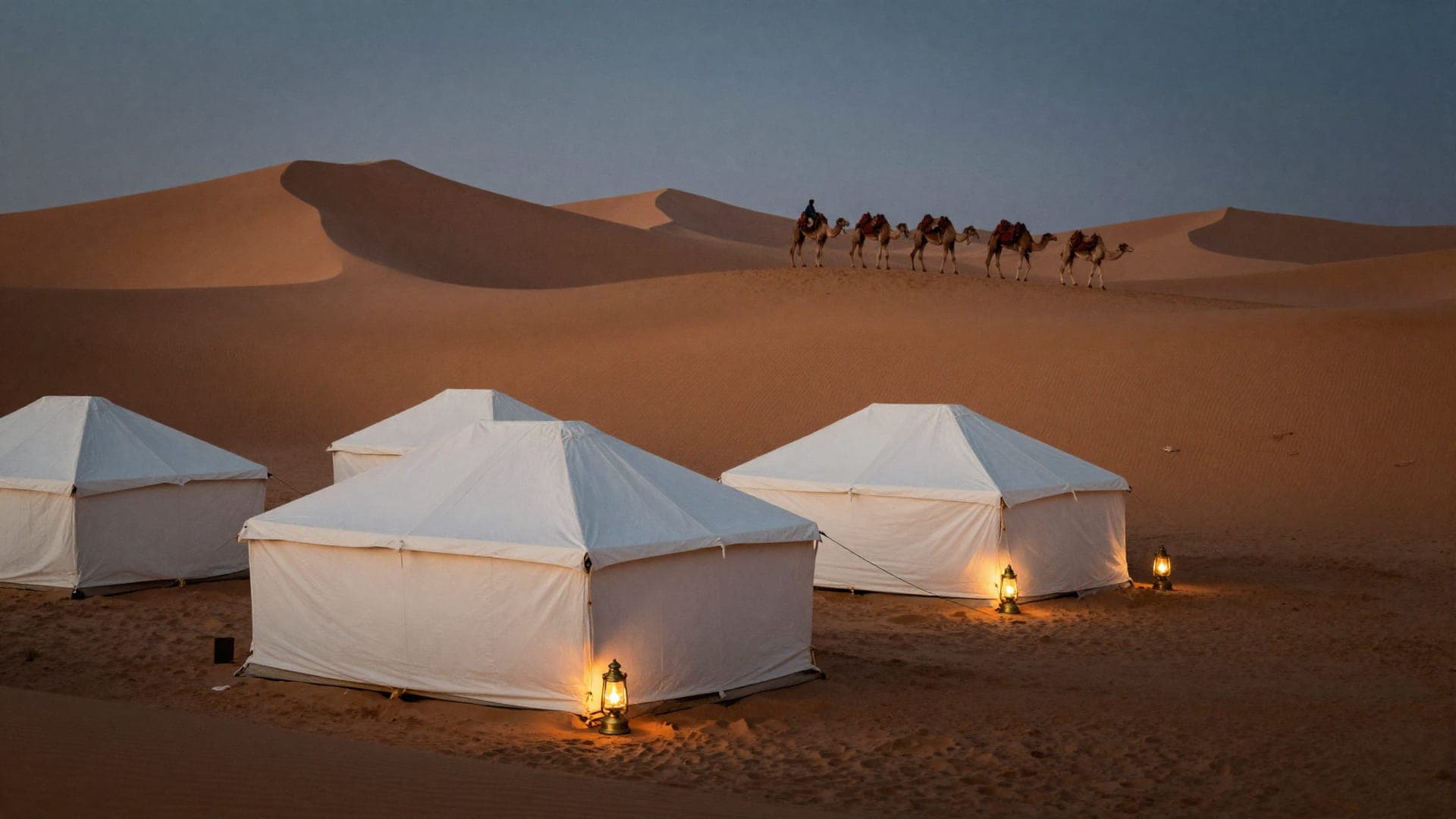
Day 6 — Erfoud → Merzouga → camel trek into Erg Chebbi
✦Day 07 · 07 April 2027
The Road of a Thousand Kasbahs
Wake for sunrise over the dunes — the finest light of the whole desert — before we turn west onto the legendary Road of a Thousand Kasbahs, following the old caravan route between palmeries and fortified earthen villages. We pause at the Todgha Gorge, where a cold clear river has cut a slot canyon between sheer limestone cliffs rising up to 300 metres, narrow enough in places to touch both walls. The road then winds through the Dadès Valley, past rose-coloured rock formations and ribbons of green oasis, before we reach the serene palm grove of Skoura, an oasis studded with historic kasbahs — a tranquil place to spend the night away from the crowds.
- Drive
- approx. 225 mi / ~6.5h with stops
- Night
- Sawadi, Skoura
- Meals
- Breakfast
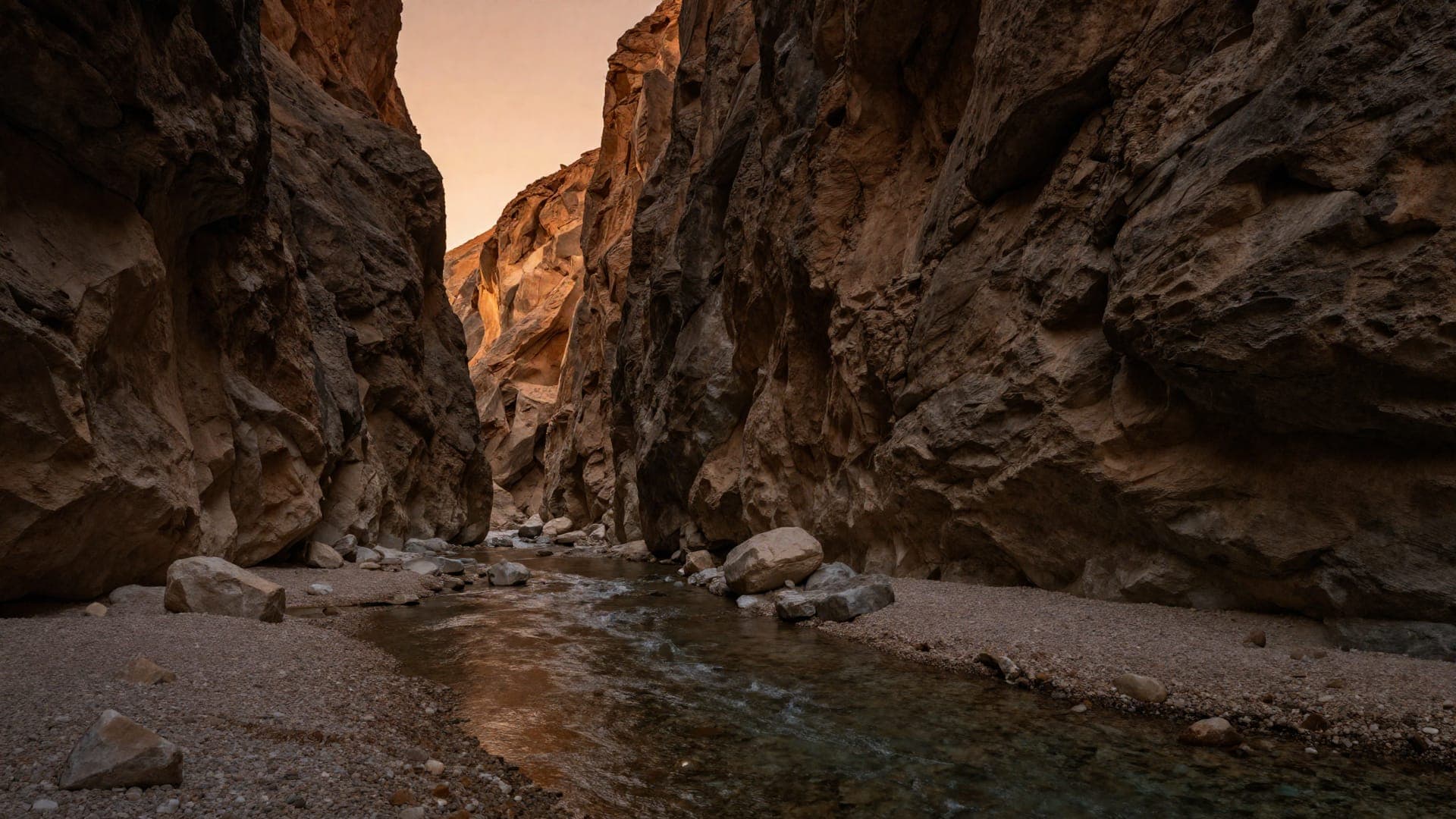
Day 7 — Merzouga → Tinghir → Todgha Gorge → Dadès Valley → Skoura
✦Day 08 · 08 April 2027
Cinema, Sandcastles & the High Atlas
A short hop brings us to Ouarzazate, the "door of the desert" and Morocco's unlikely film capital — home to Atlas Film Studios (where everything from Lawrence of Arabia to Gladiator and Game of Thrones was shot) and the restored Taourirt Kasbah. The day's showpiece is Aït Benhaddou, a UNESCO-listed ksar of packed-earth towers stacked against a hillside above the Ounila river — the most spectacular fortified village in the country, and instantly familiar from the screen. From there the road climbs the High Atlas, cresting the dramatic Tizi n'Tichka pass (2,260 m) with its switchbacks and mountain-Berber villages, before descending into the palm groves and red walls of Marrakech by evening.
- Drive
- approx. 125 mi / ~4.5–5h with stops
- Night
- Palais Andara Riad & Spa, Marrakech
- Meals
- Breakfast
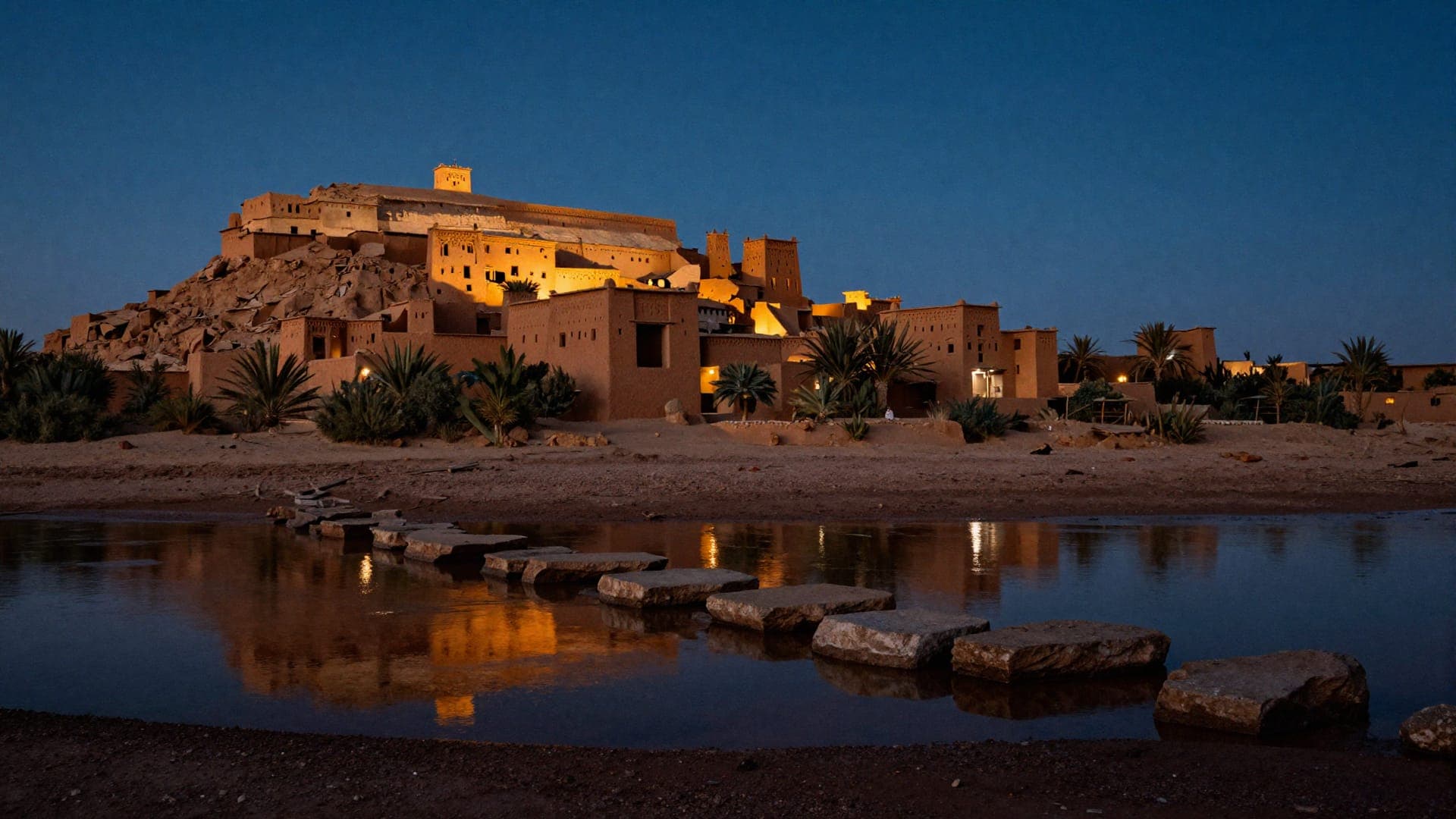
Day 8 — Skoura → Ouarzazate → Aït Benhaddou → Tizi n'Tichka → Marrakech
✦Day 09 · 09 April 2027
The Red City
A full day in the ochre capital of the south, a city of gardens, palaces and controlled chaos. With a local guide you'll take in the Koutoubia minaret (the 12th-century template for Rabat's Hassan Tower and Seville's Giralda); the stucco-and-tile splendour of the Bahia Palace; the intricate Saadian Tombs; and the restored Ben Youssef Madrasa, once the largest Islamic college in North Africa. For contrast, the cobalt-blue Jardin Majorelle — rescued by Yves Saint Laurent — offers a cool, planted refuge. Then, as day tips into night, we step into the beating heart of the city: Jemaa el-Fna, the great square that fills with snake charmers, storytellers, musicians, herbalists and a hundred smoking food stalls — a UNESCO "Masterpiece of Oral Heritage" that is pure sensory theatre. Time, too, to lose yourself in the souks for lanterns, leather, carpets and spice.
- Drive
- minimal (city touring)
- Night
- Palais Andara Riad & Spa, Marrakech
- Meals
- Breakfast
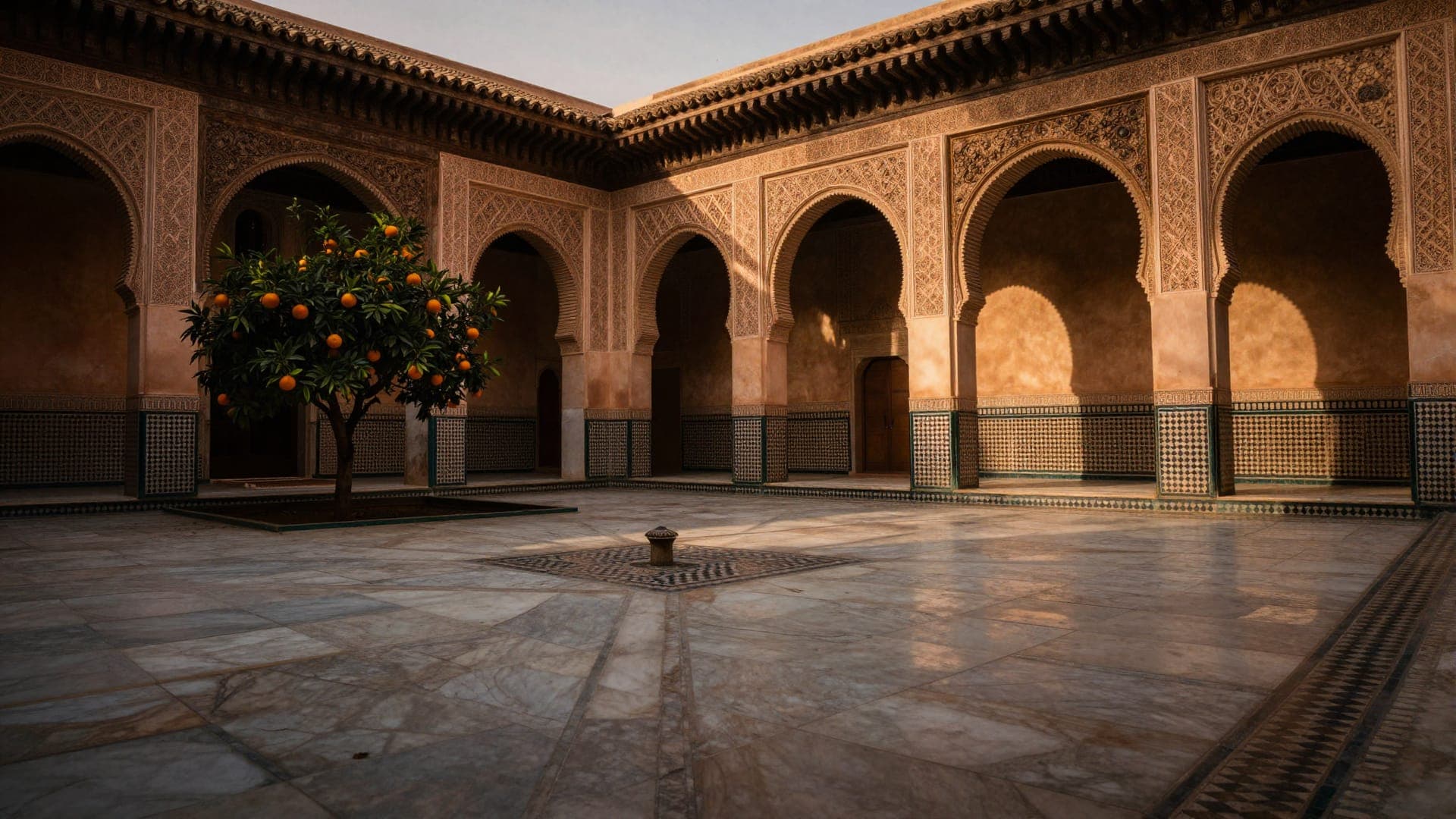
Day 9 — Marrakech — full day
✦Day 10 · 10 April 2027
Atlantic Winds: Essaouira
We trade the heat of the interior for the breeze of the coast, driving west through argan groves — the only place on earth the tree grows, and where you may spot goats improbably perched in the branches. On the coast lies Essaouira, a UNESCO-listed 18th-century port whose personality is pure Atlantic: whitewashed and blue-shuttered, salt-scrubbed and unhurried. You'll walk the Skala de la Ville ramparts with their line of bronze cannons and crashing surf, watch the cobalt fishing boats unload at the working harbour, and browse a relaxed medina known for thuya-wood craft, art galleries and gnaoua music. The wind that made Essaouira a kitesurf capital also keeps it cool and calm — the perfect exhale near the journey's end.
- Drive
- approx. 120 mi / ~3h
- Night
- Villa Quieta, Essaouira
- Meals
- Breakfast
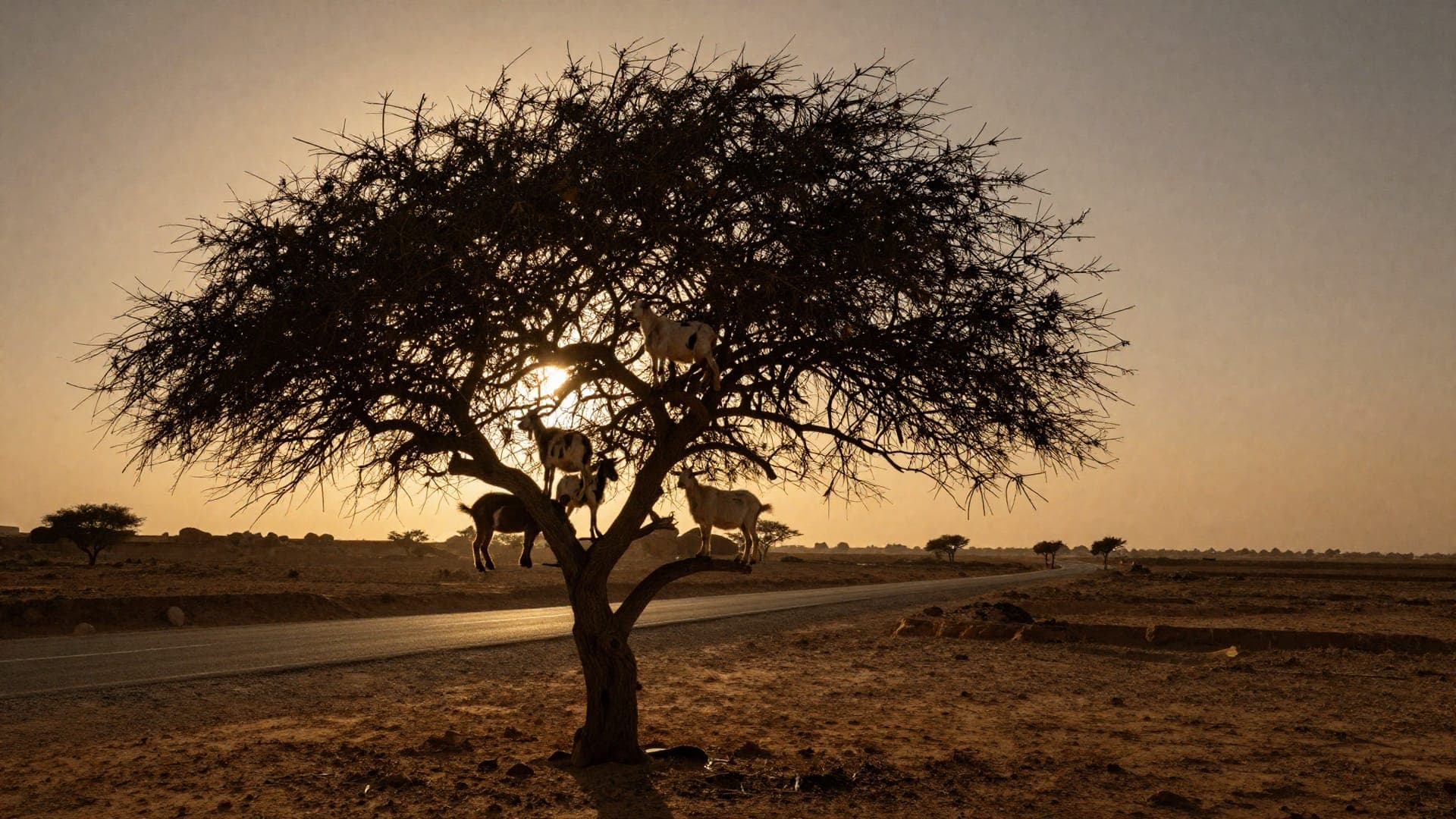
Day 10 — Marrakech → (argan country) → Essaouira
✦Day 11 · 11 April 2027
Modern Morocco by the Ocean
The coast road carries us north to Casablanca, Morocco's largest city and its economic and modern heart — an Art-Deco-meets-Mauresque metropolis far from the medinas of the interior. The centrepiece is the colossal Hassan II Mosque, one of the largest in the world, rising directly over the Atlantic on a promontory where the waves break beneath its glass floor; its minaret climbs to 210 metres, and it is one of the few mosques in Morocco non-Muslims may enter (by guided visit). We'll walk the Corniche seafront and, if time allows, the old medina, before a farewell dinner to toast the eleven days and the length of a country crossed.
- Drive
- approx. 215 mi / ~5h
- Night
- Melliber Apart-Hotel, Casablanca
- Meals
- Breakfast · Farewell dinner
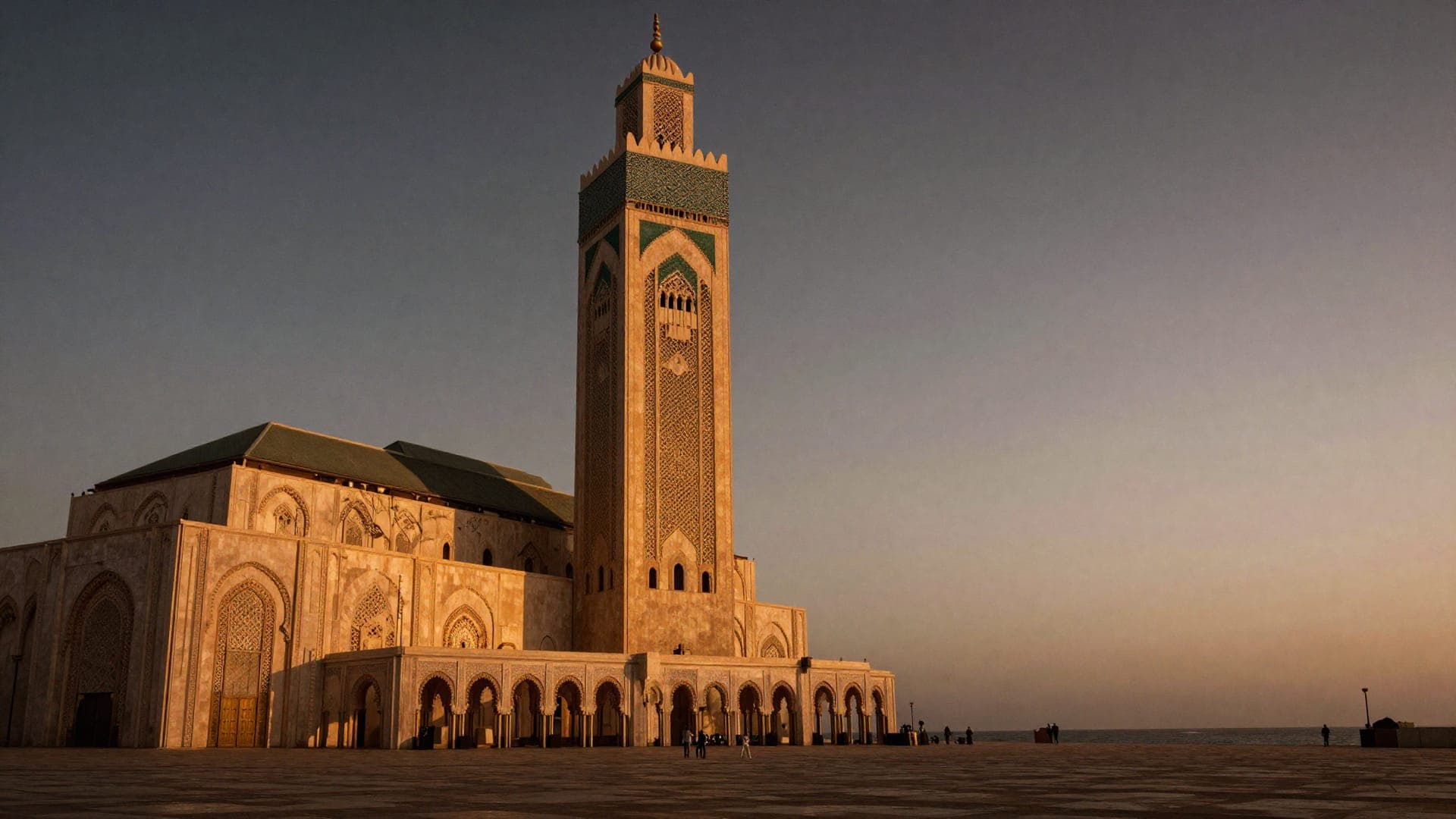
Day 11 — Essaouira → Casablanca
✦Day 12 · 12 April 2027
Departure
Time at leisure until your private transfer to Mohammed V Airport for your onward flight. You leave with the blue of Chefchaouen, the gold of the Sahara and the red of Marrakech — eleven nights of Morocco carried home. Bslama — until we meet again.
- Drive
- to airport per flight time
- Night
- departure day
- Meals
- Breakfast
Day 12 — Casablanca → Mohammed V Airport (CMN)
✦Where you sleep
Nine stays, all named
The only itinerary on the site with published accommodation. Every other route is quoted with its properties confirmed in writing before you pay.
- Rabat · 1 night
- Riad Kalaa
- Chefchaouen · 1 night
- Hotel Cherifa
- Fez · 2 nights
- Riad Ahlam
- Erfoud · 1 night
- Xaluca Erfoud
- Merzouga / Erg Chebbi · 1 night
- Dihya Desert Camp
- Skoura · 1 night
- Sawadi
- Marrakech · 2 nights
- Palais Andara Riad & Spa
- Essaouira · 1 night
- Villa Quieta
- Casablanca · 1 night
- Melliber Apart-Hotel
✦Included
What the price covers
- 11 nights in hand-picked riads, a desert-style resort, a luxury Sahara camp & a city apart-hotel
- Daily breakfast; desert dinner (Day 6) and farewell dinner (Day 11)
- Private, air-conditioned vehicle with a professional English-speaking driver-guide throughout
- Licensed local guides in Fez & Marrakech
- Camel trek and overnight in Erg Chebbi
- Entrance fees to the monuments and scenic spots listed in the itinerary
- All inter-city transfers and airport meet-and-greet (arrival & departure)
- Bottled water on board throughout
- All applicable local taxes
- International flights to/from Casablanca (CMN)
- Lunches and any meals not specified
- Travel insurance, gratuities/tips, and personal expenses
- Optional activities (4×4 dune driving, sandboarding, hammam, cooking classes, etc.)
✦Practical
Before you go
- Pace
- Moderate. Two long scenic driving days (Day 5 and Day 7); the rest are relaxed.
- Group
- Private and tailor-made — dates, pace, accommodation tier and add-ons are all adjustable.
- Physical level
- Easy–moderate; light walking on uneven medina and gorge ground; short camel ride (skippable).
- Languages
- Arabic & Darija (local); French widely spoken; your guide/driver speaks English.
- Currency
- Moroccan Dirham (MAD); cards accepted in cities, cash useful in rural areas & souks.
- Climate note
- Desert is hot by day / cool at night — layers recommended; Atlas passes can be cold/snowy in winter.
- What to pack
- Comfortable walking shoes, sun protection, a warm layer for desert nights & mountains, modest dress for religious sites, a scarf.
- Connectivity
- A local eSIM/SIM gives good coverage in cities and most of the route; expect gaps in remote Atlas/desert stretches.
- Visas & entry
- Many nationalities enter visa-free for tourism — travellers should check their own requirements.
Best seasons — March–May · September–November. March–May and September–November (spring adds the Rose Valley bloom; autumn brings clear desert skies). Summer is viable but hot inland/desert; winter is crisp with possible Atlas snow.
✦Questions
The ones people ask
- How long is the tour and where does it start?
- 12 days / 11 nights, starting and ending in Casablanca.
- Is this a private tour?
- Yes — a private, chauffeured, tailor-made journey; dates and details flex to you.
- How much driving is involved?
- Around 1,500 miles total; two days (to the desert and along the Kasbah Road) are long but among the most scenic.
- When is the best time to go?
- Spring (Mar–May) and autumn (Sep–Nov) are ideal for comfortable temperatures.
- Do I sleep in the Sahara?
- Yes — one night in a luxury desert camp in Erg Chebbi, reached by camel.
- Are flights included?
- No — international flights are separate; all in-country transport is included.
✦Places on this route
Where the twelve days reach
RabatCasablancaChefchaouenVolubilis & MeknesFesZiz ValleyAzrou Cedar ForestErg ChebbiSkoura & the Valley of RosesTizi n'TichkaOuarzazateMarrakechEssaouira